 WardSignal
Rounding you can prove
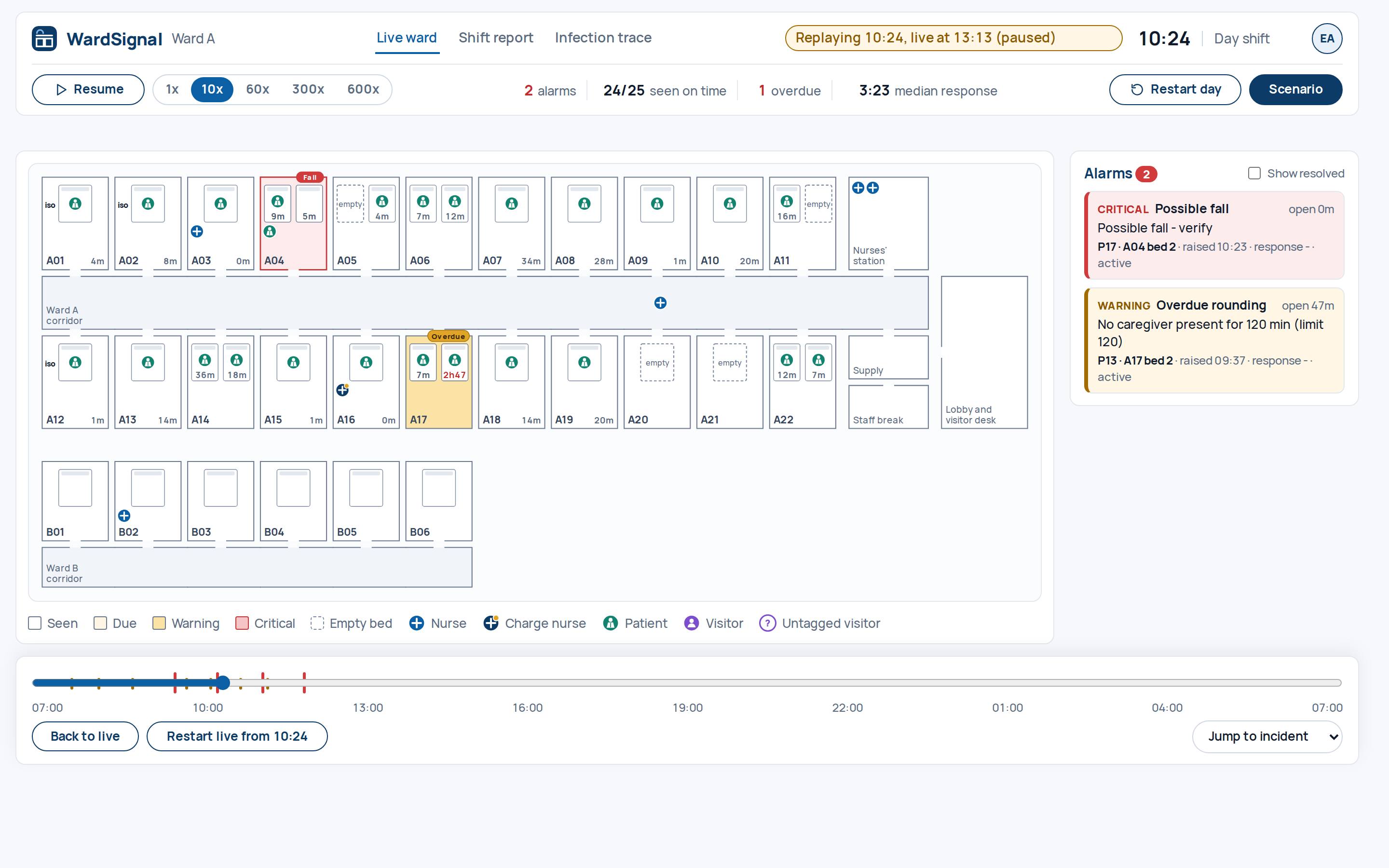
Every bedside visit is recorded from the nurse's badge. A room that has gone too long without one turns amber, then red, before anyone has to ask.
Product
WardSignal reads location badges and room sensors and shows one live floor plan: who is up, who has not been seen, and which alarm needs a nurse now.
Every bedside visit is recorded from the nurse's badge. A room that has gone too long without one turns amber, then red, before anyone has to ask.
A high fall-risk patient leaving bed, a possible fall on the floor or a wet pad raises an alarm on the floor plan, with the time to the first nurse at the bedside.
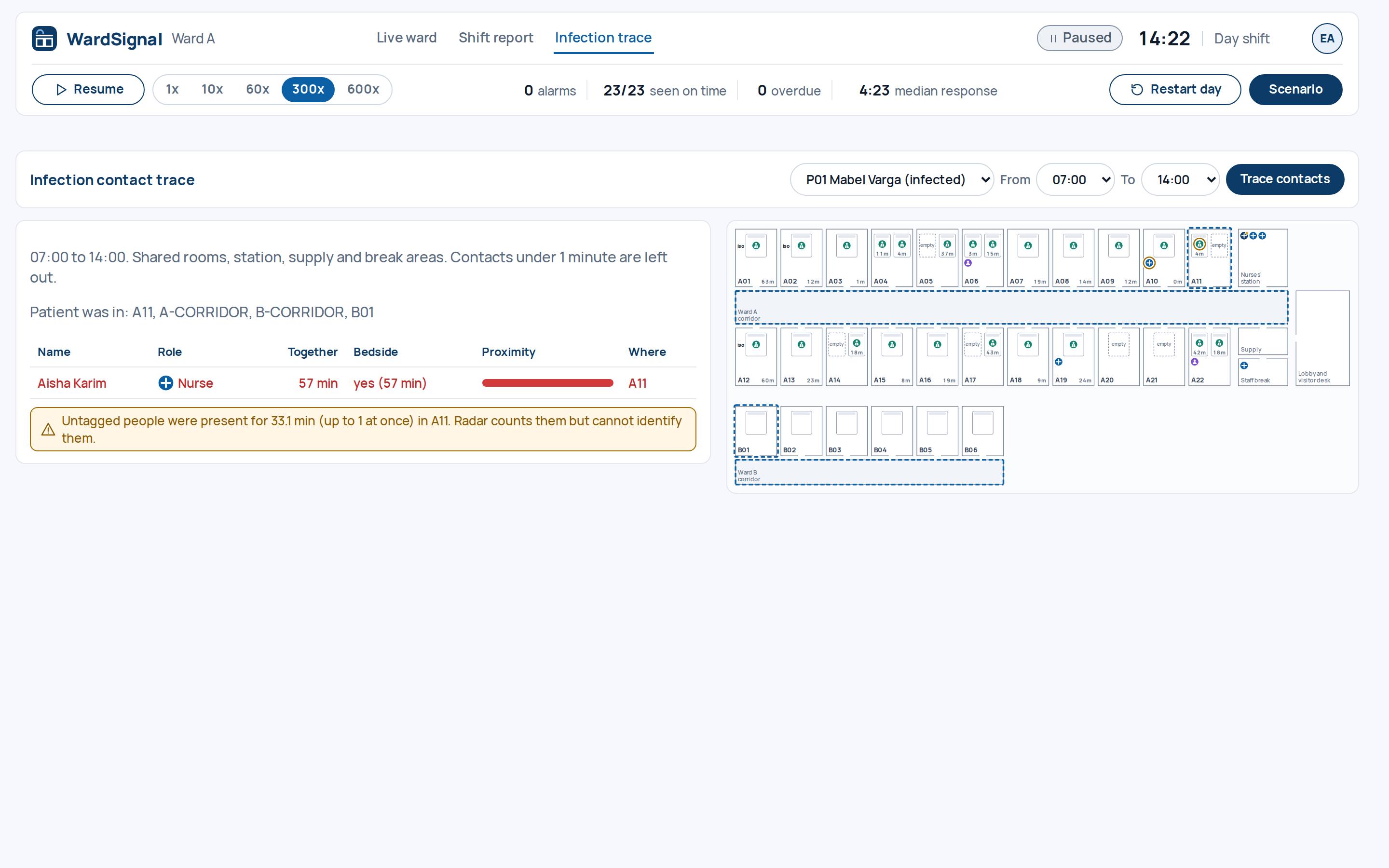
When a patient is flagged, see who shared a room or a bedside with them, for how long, and when, in minutes rather than a day of interviews.
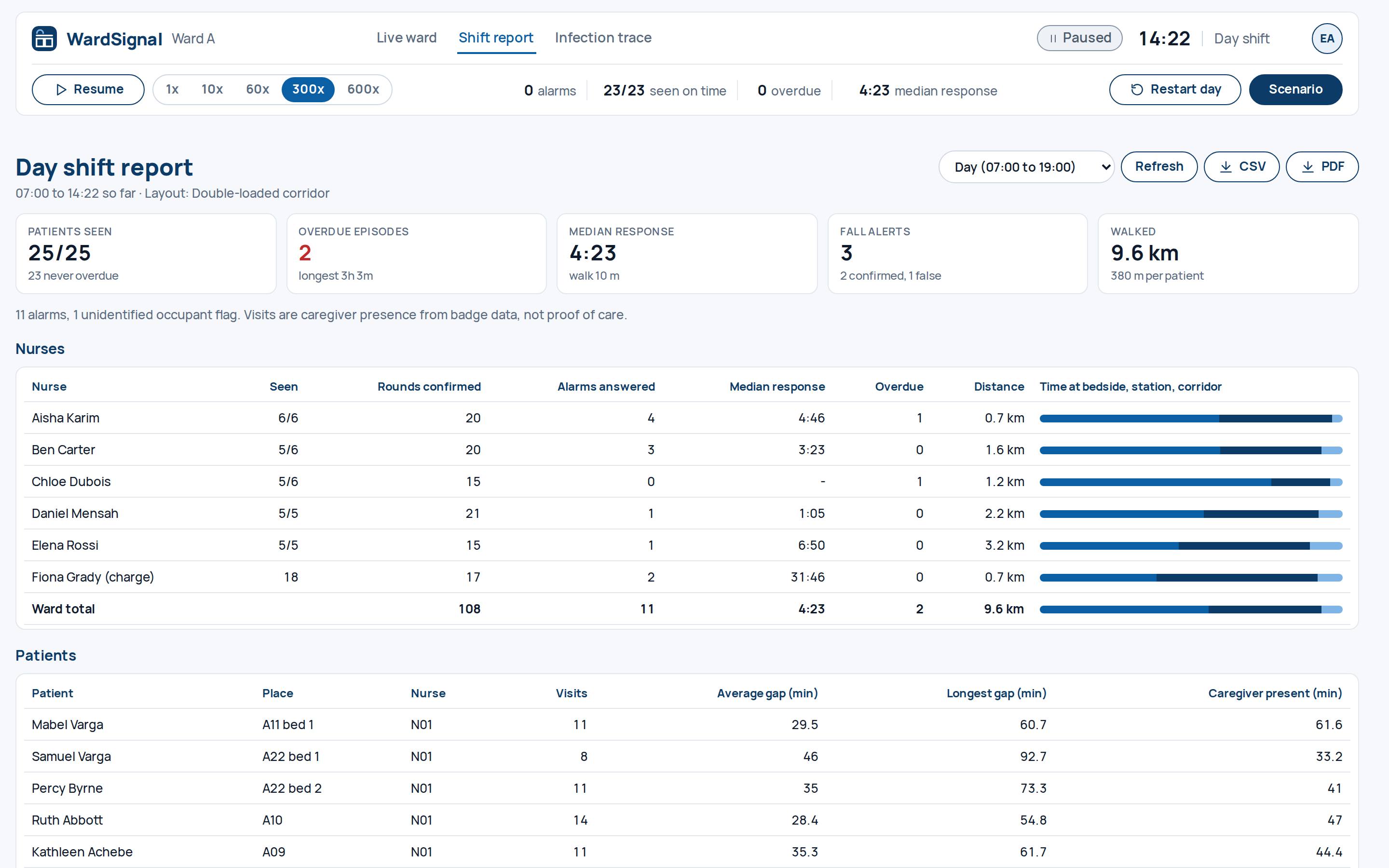
Each shift's rounds, alarms and response times in one report, as a PDF for the huddle and a CSV for your own analysis.
How it works
Staff, patients and visitors wear location badges. Each room has a radar sensor and, where needed, a bed exit and a wetness sensor.
Events arrive in seconds and are turned into presence, rounds and alarms, with your ward's own thresholds.
The charge nurse sees the live ward; alarms show on the live floor plan and in the alarm list; each shift closes with a report you can export.
What the ward sees
Stills from WardSignal running on a simulated ward. No real patient appears on this site.
One ward, real staff, real nights. At the end you decide with your own numbers.
Request a pilot